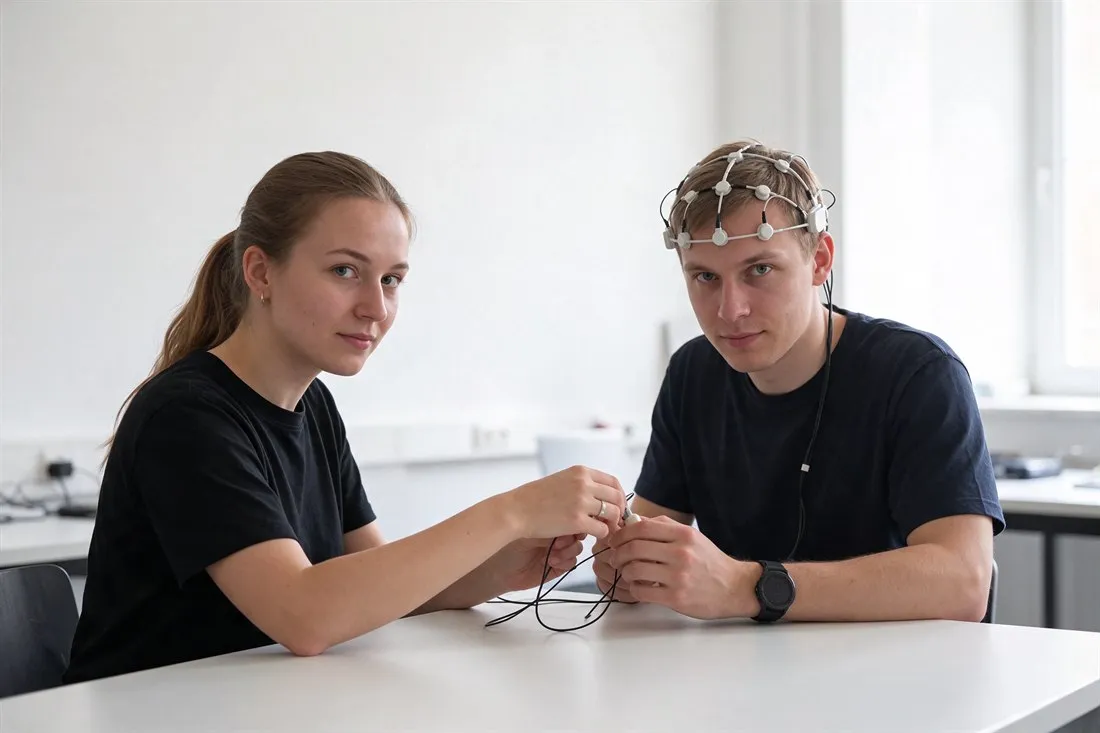


Cognitive Science – Technology, Communication, Design is a full-time Bachelor's programme at the Polish-Japanese Academy of Information Technology (PJAIT), lasting three years (six semesters). It is for people who want to combine technology with an understanding of how people think, communicate and use digital products.
The curriculum is interdisciplinary and modular. Courses are grouped into thematic pathways developed over several semesters:
After the fourth semester you choose courses within one of two specialisation tracks, taught in semesters five and six. Service, Product and Experience Design focuses on designing complete digital services and products, with an emphasis on usability, aesthetics and technology. Interaction and Interface Design concentrates on communication between people and computers, interfaces and user experience, sensory and emotional interaction, ergonomics and the design of digital environments.
Free Japanese classes are open to you once you have completed the first semester. The course starts from the very beginning, so no previous knowledge is needed, and intensive English instruction runs throughout your studies.
The programme is shaped by the needs of the digital market, which looks for versatile specialists. Graduates can work as product owner, product manager, brand manager, communication manager, account manager or digital content creator, in established companies and in start-ups.
If you lean towards research or analysis, you can continue in the second- and third-cycle programmes at PJAIT.
Based on the programme pages at pja.edu.pl.
Aktualizacja: 05.11.2026

10 questions · two minutes

Stolica pełna możliwości
Warszawa, jako centrum polityczne, gospodarcze i kulturalne kraju, otwiera przed studentami nieograniczone szanse na nawiązywanie kontaktów oraz uczestnictwo w prestiżowych wydarzeniach. To miejsce, gdzie działalność instytucji publicznych i międzynarodowych organizacji tworzy unikalne środowisko sprzyjające rozwojowi zawodowemu.
Dynamiczny rynek pracy
Miasto przyciąga największe przedsiębiorstwa oraz innowacyjne startupy, co zapewnia dostęp do licznych praktyk, staży i projektów współpracy. Dzięki temu studenci szybko zdobywają praktyczne umiejętności, które przekładają się na dynamiczny start kariery zawodowej.
Bogata oferta kulturalna i rozrywkowa
Warszawa oferuje szeroki wachlarz wydarzeń kulturalnych, od koncertów i wystaw, po festiwale i spektakle. Ta różnorodność pozwala studentom nie tylko na relaks, ale również na rozwijanie zainteresowań i twórczego podejścia do życia poza uczelnią.
Międzynarodowy charakter
Spotkanie studentów i profesjonalistów z całego świata sprawia, że warszawskie środowisko naukowe jest wielokulturowe i otwarte. Ta globalna wymiana doświadczeń wzbogaca perspektywy edukacyjne i przygotowuje do pracy na arenie międzynarodowej.
Nowoczesna infrastruktura
Rozbudowana sieć transportowa, nowoczesne kampusy, centra naukowe oraz przestrzenie coworkingowe zapewniają komfortowe warunki do nauki i badań. Warszawa inwestuje w rozwój technologiczny, co umożliwia studentom korzystanie z najnowszych rozwiązań i zasobów miejskich.