


Jagiellonian University in Kraków (UJ) runs Global and Development Studies at the Faculty of International and Political Studies as a three-year (six-semester) full-time bachelor’s programme with a general academic profile, taught entirely in English. It is meant for students who already use English well enough to study in it and who want to understand how globalisation and development problems shape today’s world.
The programme is interdisciplinary: it gives you a basic but wide-ranging knowledge of contemporary globalisation processes and of the development problems facing the modern world. You learn to understand and explain political, economic, social and cultural processes on a global and regional scale, as well as the mechanisms that govern international relations.
This is backed by an analysis of the cultural, economic and institutional conditions of international relations and of the global threats that arise from them. A significant part of the course looks at ways of countering these threats and limiting their negative political, economic and social effects.
Classes take place in the faculty’s modern building at ul. Reymonta 4, which has eight floors with four large lecture halls, dozens of lecture and seminar rooms, a student area and a faculty library with a spacious reading room. The building stands close to the Jagiellonian Library, Jordan Park and Kraków’s Błonia meadows.
All teaching is in English, so you need a good command of the language from the very start. Language and cultural competences play an important role in preparing graduates for their future work. The faculty runs many programmes in English, often in cooperation with foreign universities, which means you study in a nationally and culturally diverse environment. Students can also join scientific societies such as The Association of International and Area Studies.
Skills in analysing global processes are useful in:
As of the 2026/27 admissions, based on the programme pages at studia.uj.edu.pl.


Bogata tradycja akademicka
Kraków od wieków kojarzy się z nauką i intelektualizmem. Historyczne środowisko miasta, z wieloma uczelniami i tradycjami akademickimi, nadaje studiowaniu wyjątkowy klimat, który inspiruje do głębokiej refleksji i rozwoju naukowego.
Niepowtarzalna atmosfera historyczna
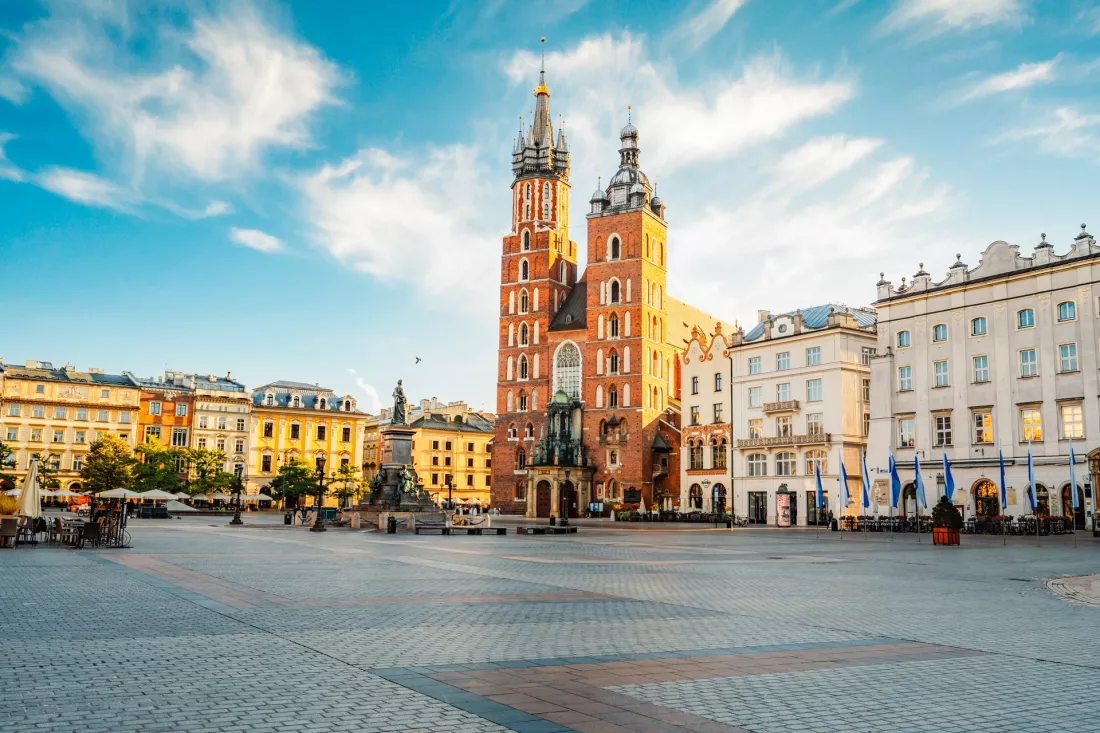
Zabytkowe kamienice, malownicze uliczki i urokliwe place tworzą niezapomniany klimat, który codziennie inspiruje studentów. Otoczenie pełne historii i kultury sprzyja rozwijaniu kreatywności i poszerzaniu horyzontów.
Bogactwo kulturalne
Kraków to centrum kulturalne Polski, gdzie festiwale, wystawy, koncerty i wydarzenia artystyczne odbywają się niemal na każdym kroku. Taka oferta pozwala studentom nie tylko na naukę, ale i na aktywne uczestnictwo w życiu kulturalnym, co wzbogaca ich doświadczenia i rozwija pasje.
Społeczność studencka
Miasto przyciąga studentów z całego kraju i zagranicy, tworząc żywą, otwartą i wspierającą społeczność akademicką. Intensywne życie studenckie, liczne inicjatywy i spotkania umożliwiają budowanie trwałych relacji, które często przeradzają się w wartościowe kontakty zawodowe i przyjaźnie.
Inspirujące środowisko naukowe
Kraków oferuje nie tylko tradycyjne przestrzenie edukacyjne, ale także nowoczesne centra badawcze, biblioteki i miejsca spotkań naukowych. To połączenie tradycji z nowoczesnością stwarza idealne warunki do poszerzania wiedzy oraz rozwijania umiejętności praktycznych, przygotowując studentów do wyzwań współczesnego rynku pracy.